The unofficial national dish
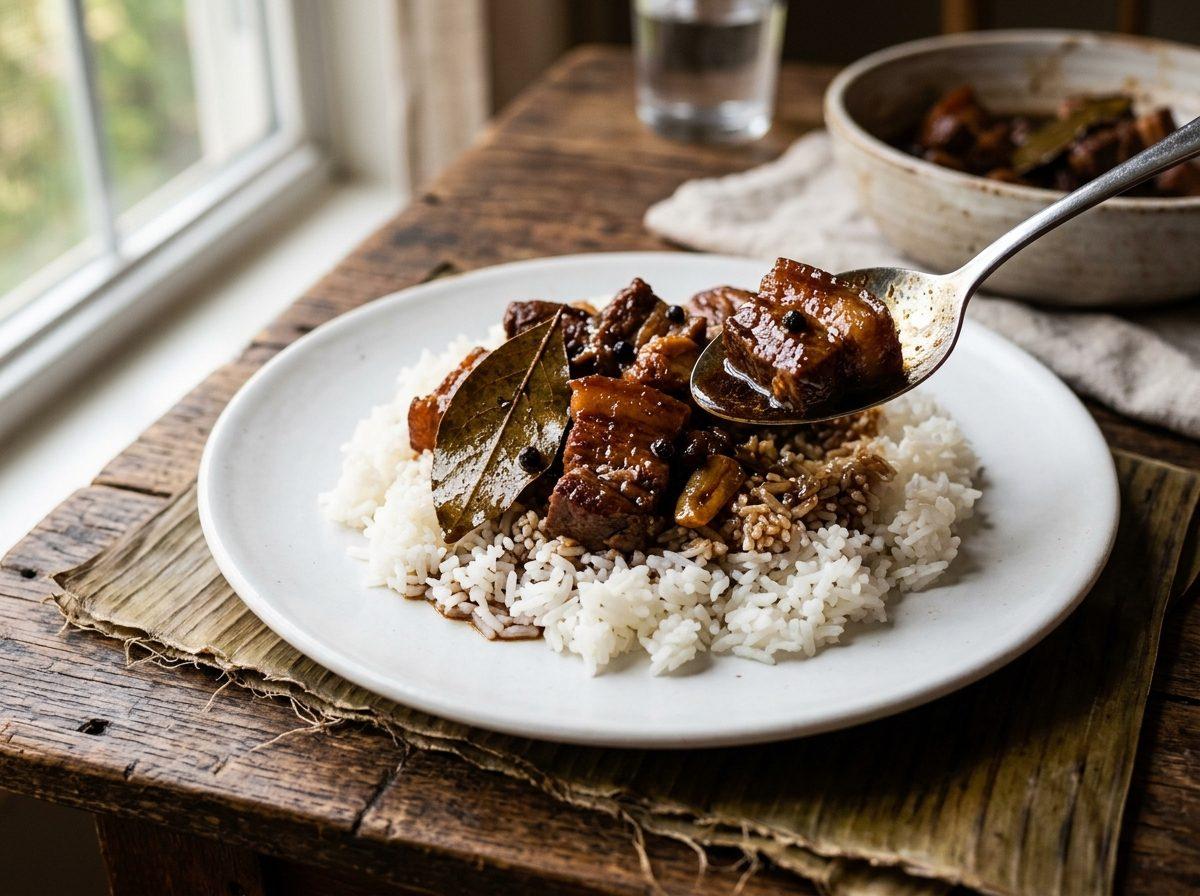
Pork Adobo Rice
Pork slow-braised in soy, vinegar, garlic and bay, served over steamed rice.
$10.00
Contains
- soy
- wheat
Dish photos are illustrative.
Where adobo comes from
Adobo is the dish most often named when someone asks what Filipino food tastes like, and whether it deserves to be called the national dish is an argument Filipinos genuinely enjoy having.
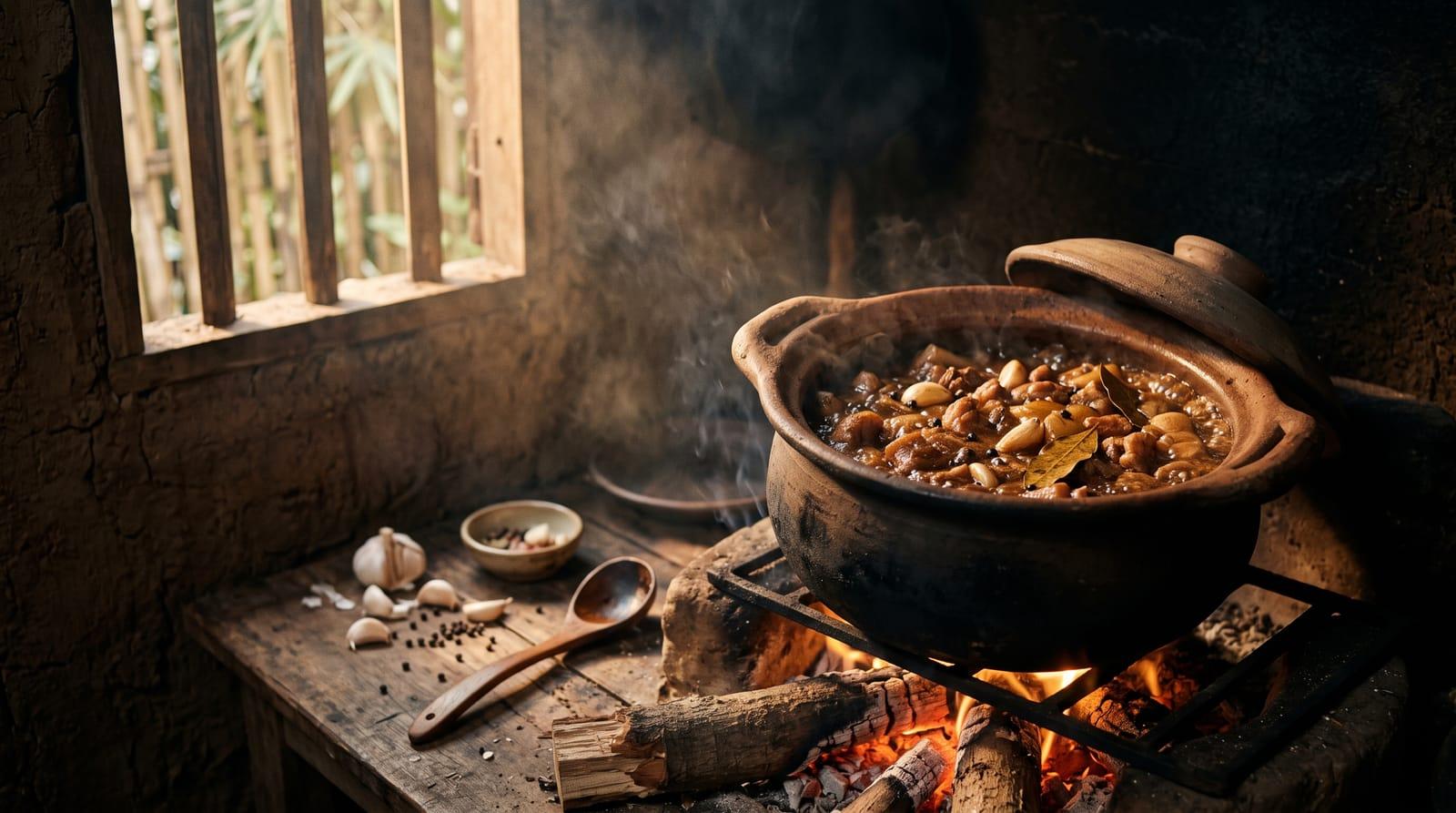
The method is older than the Spanish word for it. Simmering meat in vinegar and salt was how food kept in a hot climate long before refrigeration; Spanish cooks who met the technique called it adobo, their word for a marinade, and the name stuck. Soy sauce, garlic, peppercorns, and bay leaves came later.
No two families make it the same way — more vinegar, more sugar, darker, drier — and each version is the correct one to whoever grew up on it.
Heritage film — artistic interpretation